



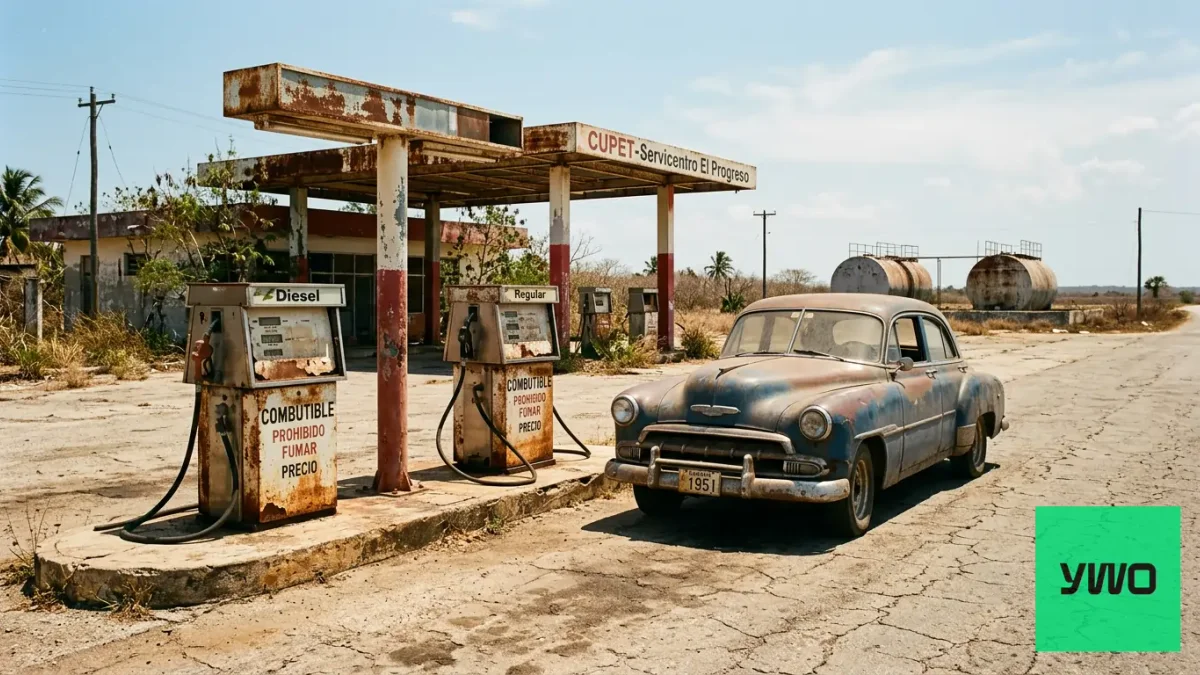
Cuba has run out of diesel and fuel oil, and the protests breaking out across Havana are not a political story — they are a case study in what happens when hydrocarbon import dependency meets sustained supply disruption, according to Investing.com News. Reports suggest that the island has no buffer, no alternatives, and no near-term relief visible.
Power cuts are deepening. The situation highlights how severe supply disruptions can affect import-dependent economies
The proximate cause, per the same report, is the tightening of the US oil blockade. Cuba’s fuel supply chain runs almost entirely on imported hydrocarbons — primarily crude and refined products — and with that pipeline now severed at the source, the economy has effectively stalled.
Diesel is the working fluid of any island economy: it runs generators when the grid goes dark, moves food from ports to markets, and keeps hospitals on backup power. When the diesel is gone, those are not inconveniences. They are cascading, compounding failures.
Why This Matters Beyond One Island
Cuba’s GDP is not a market-moving variable. But the structural dynamic on display here — a sanctions-enforced supply cutoff driving acute domestic energy collapse — has precedents that commodity traders do monitor, particularly in the context of how quickly a physical shortage can spiral once inventories drop to zero.
Reports suggest Cuba currently has limited access to alternative supply channels or strategic reserves.
For crude oil and distillate markets more broadly, Cuba is not a material demand centre. The supply impact on global Brent or WTI pricing from Havana’s crisis will likely be negligible. What the situation does illustrate, however, is the fragility baked into any economy that runs a single-corridor import model for refined products. Fuel oil and diesel are fungible globally, but only if you can access the market — and access requires either hard currency, political neutrality, or both. Cuba however, faces significant constraints in both.
The mechanism worth watching is indirect. Venezuela, Cuba’s primary hydrocarbon benefactor in recent years, has itself been operating under layered US sanctions. If Washington’s posture toward Caribbean energy flows is hardening simultaneously — and the Cuba reporting suggests it is — then the question for distillate traders is whether any overspill demand materialises in regional spot markets, or whether supply disruptions result in broader economic shutdowns
The Diesel Market Sits in a Different Place Than Crude
Diesel and fuel oil are not crude oil. That distinction matters for how traders should think about supply disruption risk. Refining capacity, crack spreads, and regional logistics create a second layer of vulnerability that pure crude-price analysis misses.
The shortages appear linked to both supply and logistics limitations — the country would need both the crude and the refining capacity (or access to finished products) to restore normal function. Sanctions significantly restrict both pathways simultaneously.
For names exposed to Caribbean or Latin American refined-product distribution, the Cuba situation is more of a political-risk flag than a near-term earnings catalyst. The volumes are simply not large enough to move the needle on major integrated majors.
The risk, if it spreads, is reputational and regulatory — any third-country supplier seen breaking the US blockade faces secondary sanctions exposure that has historically been enough to deter most commercial counterparties.
That calculus is not new. What has changed, per the Investing.com News report, is that the blockade appears to have tightened to the point where Cuba can no longer source even emergency supplies. Reaching zero inventory — not just running low, but exhausting stocks entirely — is a different threshold. It suggests whatever informal supply chains were operating have been closed off.
The Bear Case for a Quiet Market Reaction
The most likely market outcome here is very little price movement at all. Cuba’s total energy consumption is marginal in global terms. The protests in Havana, while a humanitarian concern and a sign of genuine social stress, may have limited direct impact on Brent pricing or distillate crack spreads in a measurable way. Traders pricing geopolitical risk into crude tend to focus on production chokepoints — the Strait of Hormuz, OPEC+ quotas, Libyan export terminals — not consumption-side collapses in small island economies.
The counterargument is that this episode may inform how markets eventually reprice Latin American energy security risk more broadly, particularly if US sanctions policy continues to evolve. Economies with similar import-dependency structures — and there are several in the region — could become more visible on commodity desks if the Cuba situation triggers a broader policy review in Washington or generates humanitarian pressure that forces diplomatic movement.
For now, the crude and distillate markets appear to be taking the Cuba story as a geopolitical footnote rather than a supply-demand catalyst. Whether that changes depends less on oil market fundamentals and more on whether the diplomatic and sanctions environment shifts, according to Reuters.
The EIA’s weekly petroleum supply data remains the primary reference point for distillate inventory trends across markets, available at EIA.
Risk Disclaimer: Trading CFDs involves substantial risk and may result in the loss of your invested capital. CFDs are complex instruments and come with a high risk of losing money rapidly due to leverage. You should consider whether you understand how CFDs work and whether you can afford to take the high risk of losing your money. Past performance is not indicative of future results. This content is for informational and educational purposes only and does not constitute investment advice.