



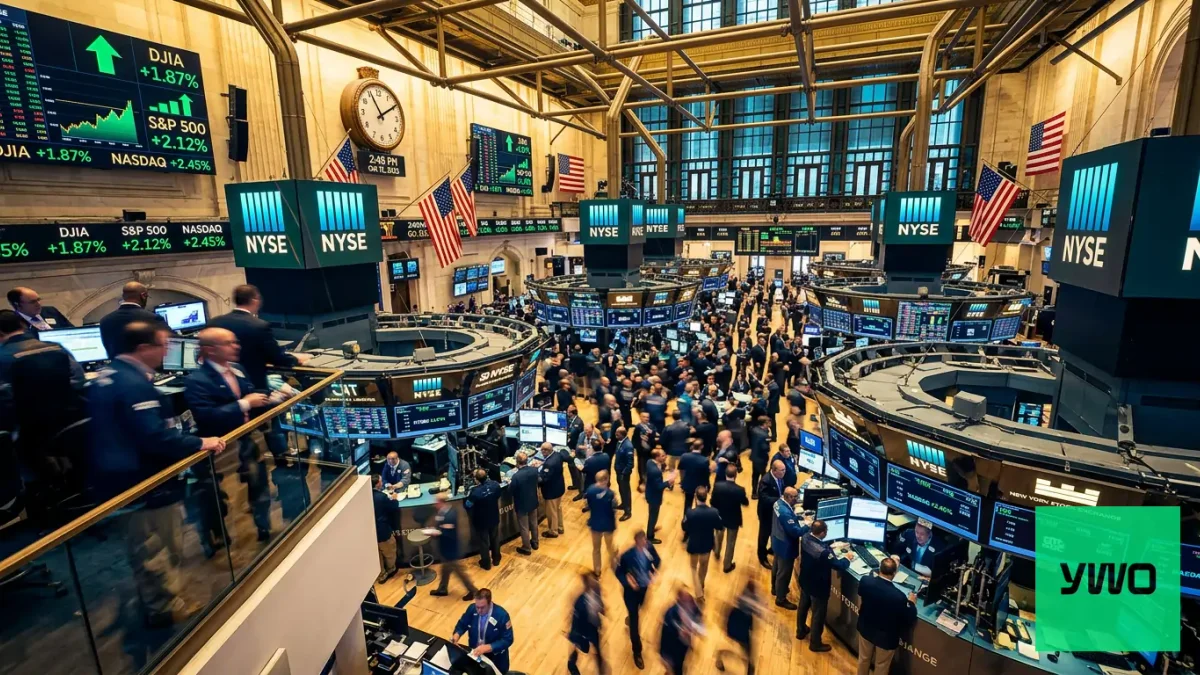
The pre-market move looks clean on the surface — Dow Jones Industrial Average futures up 305 points, or 0.6% — but the same morning that futures rallied, the U.S. military was conducting what it called “self-defense strikes” in southern Iran. That contradiction appeared to be one of the market’s primary areas of focus.
S&P 500 futures gained 0.7% and Nasdaq-100 futures advanced 1% in pre-market trading on Tuesday, the first session after U.S. markets were closed Monday for the Memorial Day holiday. Part of the move appeared linked to optimism surrounding — specifically, that a formal U.S.-Iran deal is close. President Trump said Monday that negotiations were “proceeding nicely,” while simultaneously warning that the U.S. could go on the offensive if talks collapse. That two-sentence summary from Washington suggesting markets may currently be assigning limited weight to geopolitical risk premiums :
The Strike That Complicated the Rally
U.S. Central Command spokesman Tim Hawkins confirmed that the U.S. conducted strikes against missile launch sites and Iranian boats allegedly attempting to deploy mines in southern Iran early Tuesday, describing the actions as “self-defense” and noting the U.S. used “restraint during the ongoing ceasefire.” The ceasefire framing is doing a lot of work there. Markets participants initially appeared to interpret the strikes as relatively contained rather than broadly escalatory — though sentiment could shift quickly if tensions escalate further.
The oil market split on the news. Brent crude gained 3% to $99.03 a barrel by 7:59 a.m. ET, while WTI July futures dropped 4% to $92.73 per barrel versus Friday’s close — there was no WTI settlement Monday given the holiday. The Brent/WTI divergence reflects the competing forces: a geopolitical risk premium lifting the international benchmark even as the prospect of an eventual deal weighs on the domestic contract. The divergence reflects differing interpretations of the same developments, and market pricing may continue adjusting as new information emerges
The critical context here is that last week WTI lost 8.4% — CNBC’s Sean Conlon reported it was crude’s worst week since April 17 — and that selloff was part of what drove the S&P 500 up 0.9% last week, extending its longest weekly winning streak since late 2023. Lower energy costs flowing through to margin assumptions is a defensible mechanical link; the problem is that with Brent now back near $99.03, that tailwind may begin to weaken if energy prices remain elevated. .
Semis Are Doing the Heavy Lifting
The Nasdaq-100’s 1% pre-market gain isn’t broadly distributed. Chip names are carrying it. Micron Technology was higher by more than 6% premarket, while Qualcomm and Advanced Micro Devices were each up more than 3%, according to CNBC’s Sarah Min. Part of the move appeared linked to optimism surrounding possible diplomatic progress. .The logic being that a de-escalation reduces supply-chain risk for components and eases the broader risk-off environment that had been pressuring high-beta tech.
That’s a plausible read, though it’s worth tracking whether the semi move holds into the open or fades once the morning’s strike news gets more coverage. Micron in particular has its own idiosyncratic demand story tied to AI infrastructure build-out; a 6% pre-market pop on geopolitical optimism alone could face volatility if diplomatic momentum weakens
Ferrari went the other way — shares fell 3% premarket after the Italian carmaker unveiled its first fully electric vehicle, named the Luce, at Rome’s Vela di Calatrava venue. The market’s reaction to a luxury EV launch at a landmark Roman sports complex being to sell the stock 3% may reflect cautious investor sentiment toward luxury EV demand
Fundamentals Are Competing with the Geopolitical Story
The rally has a legitimate earnings foundation, which matters when you’re trying to assess whether any post-deal resolution repricing has room to run. Adam Parker, founder of Trivariate Research, wrote in a note cited by CNBC: “There is no doubt that fundamentals are at least partially responsible for the market rally. With earnings projected to grow 23% this year, and 16% next year, there’s a credible argument to make that despite the increasing projections for earnings, and strong earnings growth, the price-to-forward earnings has been modestly contracting.”
That may be viewed as a supportive medium-term backdrop. . The Dow posted its third weekly gain in four weeks last week, up 2.1%, while the Nasdaq logged its seventh weekly gain in eight. Recent market momentum has generally remained positive and the earnings story supports it — but the multiple compression Parker flags is worth holding onto. The market is not just running on war-risk relief; it’s also digesting a genuine earnings upgrade cycle, and that has implications for how far a formal deal announcement could actually push indices.
Adam Crisafulli of Vital Knowledge cut to the real question in a note: “The consensus view still assumes there will be some type of a détente formally reached within the next few days between Washington and Tehran, which means the real question is how much of this is already priced in?”
That framing is exactly right. The S&P has been grinding higher for weeks. If a deal was the undisclosed driver of that rally, the formal announcement could lead to increased volatility or profit-taking activity rather than a fresh leg up.
The Rate Constraint Nobody Is Talking About
The more durable headwind sitting behind all of this is the Fed’s posture. With crude still elevated relative to earlier in the year and price pressures not resolved, the rate-cut narrative has compressed sharply. CME Group’s FedWatch tool showed traders pricing an 8.5% chance of a rate hike in July — up from 0.9% a month ago. That’s a meaningful repricing. It means the market’s soft-landing optimism is increasingly dependent on inflation cooperating, which may remain sensitive to energy-price developments once the Iran situation resolves.
If Brent stays near $99.03 through a ceasefire, the case for near-term Fed easing could become more challenging . That doesn’t doom equities — the earnings growth projections Parker cites could absorb higher rates if they materialise — but it may limit further valuation expansion . The front-end is the binding constraint on how much the Iran relief trade can give equities, and right now the short-term rate expectations remain relatively restrictive
The setup today is genuinely two-sided. The technical momentum is real, the earnings story is real, and the geopolitical catalyst — if it delivers — could reduce certain geopolitical risk premiums . But with Brent at $99.03, “self-defense” strikes happening the same morning futures are rallying, and July rate-hike odds up nearly eightfold in a month, the relationship between diplomatic progress and sustained equity gains may be more complex than the pre-market move alone suggests.
Risk Disclaimer: Geopolitical developments, military conflict, sanctions, and changes in monetary policy expectations can lead to sudden and unpredictable market volatility across equities, commodities, currencies, and related derivatives. References to market behaviour, asset relationships, or potential scenarios are illustrative only and should not be interpreted as forecasts, guarantees, or trading recommendations. . You should consider whether you understand how CFDs work and whether you can afford to take the high risk of losing your money. Past performance is not indicative of future results. This content is for informational and educational purposes only and does not constitute investment advice.