



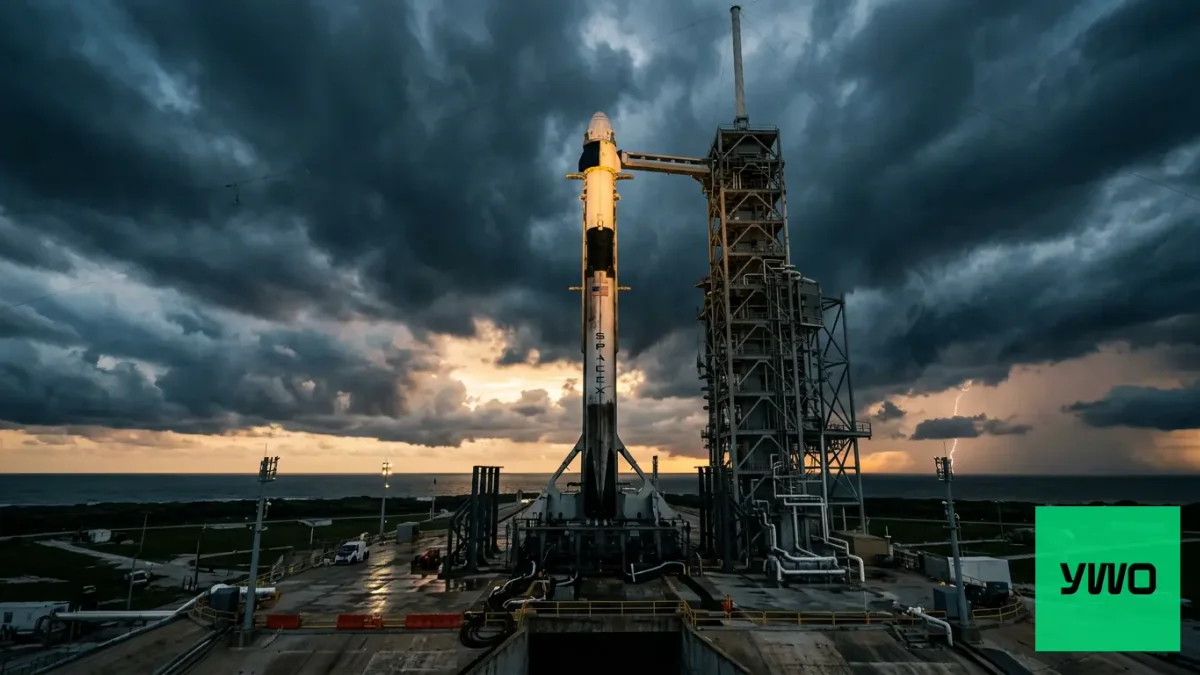
SpaceX (SPCX) shares fell 4.27% in premarket trading on Tuesday, extending a decline that erased roughly $400 billion in market value on Monday alone, CNBC’s Kai Nicol-Schwarz reported. The stock has now fallen below its IPO-day closing price — meaning every investor who bought after the first session is carrying a loss.
The timing is stark. Eleven days ago, on June 12, SpaceX priced a record-breaking IPO and watched its shares rally more than 50% above the offering price in the days that followed, briefly lifting its market capitalisation above both Amazon and Microsoft, Nicol-Schwarz noted. By the end of last week, nearly all of those gains had disappeared. Monday’s 16% single-session drop — preceded by declines of 3.6% and 5% on the two prior trading days — left the market cap at $2 trillion at Monday’s close.
Four Sessions, One Direction
The sequence matters. Monday’s 16% session loss was not a standalone shock; it was the acceleration of a trend that had been building since the post-IPO euphoria peaked. MarketWatch reported the stock had now slipped below the IPO-day close, crossing the threshold that puts the majority of the post-debut buyer base underwater.
Tuesday’s premarket print of -4.27%, recorded at 4:45 a.m. ET, adds to Monday’s damage. The cumulative draw-down from whatever intraday peak the stock reached in the days after the June 12 IPO is not specified in available sourcing, but the four-session direction — down 3.6%, down 5%, down 16%, down 4.27% pre-bell Tuesday — illustrates the extent of the recent decline in the share price. .
Debt Issuance and the Reflection Deal Land in the Middle of the Sell-Off
SpaceX announced two material developments on Monday, the same session the stock dropped 16%. The company disclosed a senior unsecured notes offering — the structure and size of which were not detailed in available sourcing — and separately revealed it held $100.8 billion in cash and cash equivalents as of June 19, Nicol-Schwarz reported.
The cash figure is substantial.The combination of a substantial cash position and a debt issuance announcement attracted market attention, although the available sourcing did not include analyst commentary regarding its significance. .
Also Monday: SpaceX disclosed a computing power agreement with Reflection, an open-source AI startup, giving Reflection access to Elon Musk’s Colossus infrastructure, per CNBC. The announcement came on the same day the stock lost a sixth of its value. The announcements coincided with continued declines in the share price.
From Musk’s Ambitions to the Close of Last Week
The IPO narrative was built on scale. SpaceX briefly outpaced Amazon and Microsoft by market cap — two of the largest companies on any exchange — before sentiment cooled, Nicol-Schwarz reported. The initial rush was driven, in part, by investors wanting exposure to Elon Musk’s stated ambitions for the company across space and AI. By last Friday, the average buyer had seen nearly all of those gains erased. By Monday’s close, buyers at the post-IPO peak were sitting on losses measured in double-digit percentages.
Post-IPO distribution of this kind — where early buyers who chased the debut rally eventually reduce or exit positions — is a documented feature of high-profile listings. What is specific to SpaceX is the speed: the round-trip from 50%-above-offer-price to below-IPO-close happened in under two full weeks.
What Could Change the Picture
The $100.8 billion cash position, if confirmed and consistently reported, represents a significant balance-sheet anchor. A company with that level of liquidity is not operationally stressed by a stock decline, and the senior unsecured notes offering — whatever its eventual size — is not the financing structure of a distressed borrower. If the sell-off is driven primarily by post-IPO positioning and momentum reversal rather than any fundamental reassessment of the business.
The counter is just as straightforward. SpaceX’s market cap was $2 trillion at Monday’s close, after a 16% decline. The valuation remains a key point of discussion among investors and market participants as trading activity continues following the company’s public debut. .
The CNBC article also referenced Amazon (AMZN) and Microsoft (MSFT), which were frequently cited as valuation comparators during the IPO period after SpaceX briefly surpassed both companies by market capitalisation. No specific data on Monday’s AMZN or MSFT closes was available in the sourcing reviewed.
Events Ahead: No specific scheduled SpaceX catalysts — earnings date, investor day, or regulatory filing deadline — were available in verified sourcing at the time of publication. Readers should monitor SpaceX investor communications and primary filings as they become available.
Risk Disclaimer: Trading CFDs involves substantial risk and may not be suitable for all investors. CFDs are complex instruments and come with a high risk of losing money rapidly due to leverage. You may lose some or all of your invested capital. You should consider whether you understand how CFDs work and whether you can afford to take the high risk of losing your money. Past performance is not a reliable indicator of future results. This article is provided for general informational and educational purposes only and does not constitute financial, investment, legal, tax, or trading advice, nor a recommendation, solicitation, or offer to buy or sell any financial instrument.