



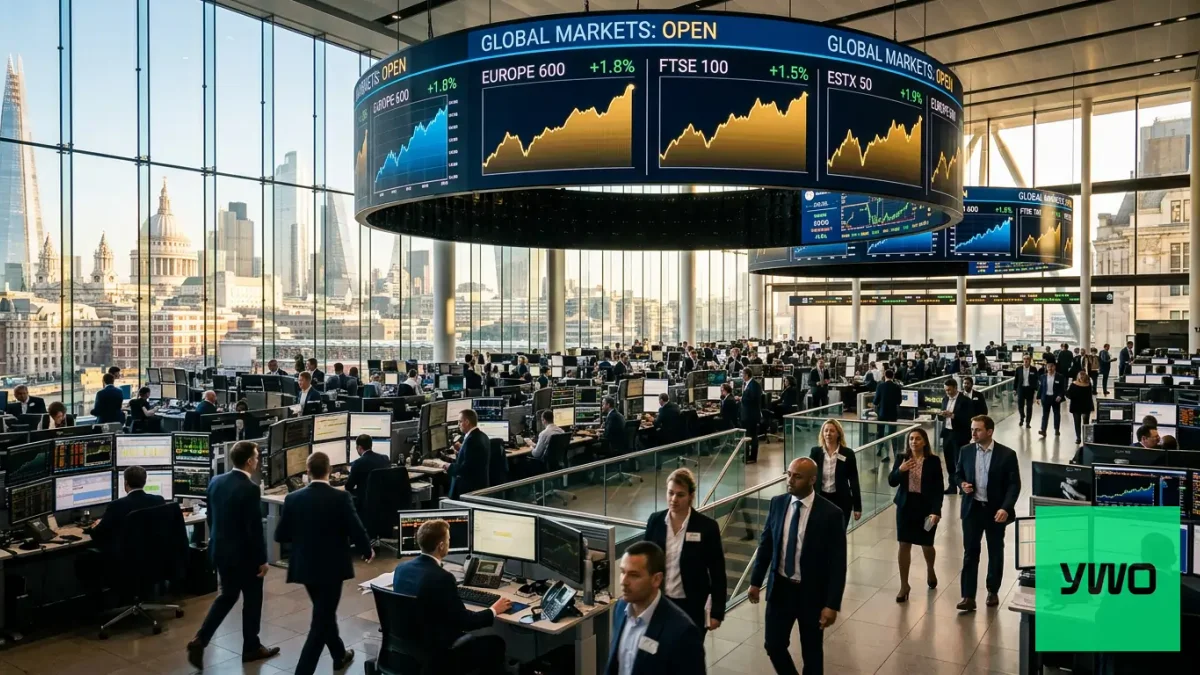
The Stoxx 600’s return to levels last seen on March 2 is less about Europe’s own fundamentals than about a single geopolitical pressure valve: the possibility that the Strait of Hormuz could reopen.
That one shipping-lane headline, amplified by a Truth Social post from President Trump, appeared to have a stronger short-term impact on French and German equities than recent European policy developments.
According to CNBC’s Joseph Wilkins, the Stoxx 600 was trading over 0.6% higher shortly after the opening bell on Monday, May 25 — marking the index’s fifth consecutive day of gains. France’s CAC 40 and Germany’s DAX each added 1.1%. The FTSE 100 sits this one out entirely, closed for a UK public holiday, which also accounts for the thinner-than-usual volumes across the board.
The March 2 Benchmark Matters More Than It Looks
March 2 wasn’t an arbitrary date. CNBC notes it was around that point that the US and Israel began a joint assault on Iran — the event that set off the multi-week pressure on European equities. Reclaiming those levels now, with diplomatic talks actively progressing, suggests much of the earlier geopolitical risk premium has been retraced. . The index isn’t breaking new ground; it’s erasing a specific fear premium. That framing matters for traders deciding whether this is continuation or mean-reversion.
Trump’s characterisation of the talks as “proceeding in an orderly and constructive manner” — posted to Truth Social over the weekend — triggered an immediate market response. He added that he had told his representatives “not to rush into a deal,” which, read carefully, isn’t the same as saying a deal is imminent. Market participants appeared to focus more heavily on the constructive tone of the comments . Oil fell more than 5% following those comments, CNBC reported, and equity risk appetite followed the energy price lower in the best possible way for stock bulls.
The decline in oil prices may help explain some of the positive equity reaction . European industrials and consumer discretionary names, which carry meaningful energy cost exposure, tend to benefit when crude pulls back sharply. Airlines operating out of Frankfurt and Paris could potentially benefit from lower fuel costs , even if thin holiday volumes today may delay that rotation becoming visible in the tape.
Nikkei 65,000 Sets the Tone for the Global Session
The regional catalyst that set European markets up for a strong open came from Tokyo. The Nikkei 225 breached 65,000 for the first time in holiday-thinned Asia trading on Monday, according to CNBC — a record high driven by the same Hormuz reopening narrative. Japan’s status as a net energy importer may partly explain the positive market reaction to lower oil prices : s. The 65,000 break set a constructive tone that European desks were trading against before their own open.
Delivery Hero’s 10.5% Gap Has a Very Specific Price Tag
Away from the macro, the morning’s sharpest single-name move belongs to Delivery Hero, which opened 10.5% higher after a weekend of deal speculation crystallised into something concrete. The Financial Times reported that Uber had weighed an improved bid, and Delivery Hero subsequently confirmed in a Saturday statement that it had received a formal takeover offer from Uber at €33 per share — implying a market capitalisation of over €10bn, per CNBC.
Delivery Hero’s statement was careful: the company said it “remains fully focused on executing its strategic review process and further updates will be provided as required or appropriate.” That’s deal language designed not to close doors.
The €33 offer price is now acting as an important market reference point — and with the stock up sharply into that level on thin holiday volumes, any fade in broader risk appetite could increase volatility if the Uber offer does not progress further . The food-delivery sector has been consolidation territory for several years; whether Uber’s bid discipline holds above €33 is the question Delivery Hero shareholders are now pricing.
Risks to the Current Rally Remain Primarily Structural
Five consecutive days of gains into a geopolitical catalyst that isn’t yet resolved carries an obvious vulnerability. Trump explicitly said his side should “not rush into a deal” — meaning this rally is priced on diplomatic mood music, not a signed agreement. If talks stall, break down, or produce a framework that falls short of Hormuz reopening, markets could experience increased volatility or partial reversal given that European indices have now clawed back the entirety of the March sell-off.
Holiday-thinned volumes are a secondary concern. Price moves during thin trading conditions may prove less durable once broader market participation returns . The five-day streak also means tactical longs are sitting on gains; any negative headline on the Iran talks this week could trigger profit-taking in names that moved quickly and cleanly.
Energy sector stocks within the DAX and CAC are a pressure point in the opposite direction. A sustained decline in oil prices could weigh on producer-weighted energy stocks
Risk Disclaimer: Trading CFDs involves substantial risk and may result in the loss of your invested capital. CFDs are complex instruments and come with a high risk of losing money rapidly due to leverage. You should consider whether you understand how CFDs work and whether you can afford to take the high risk of losing your money. Past performance is not indicative of future results. This content is for informational and educational purposes only and does not constitute investment advice.