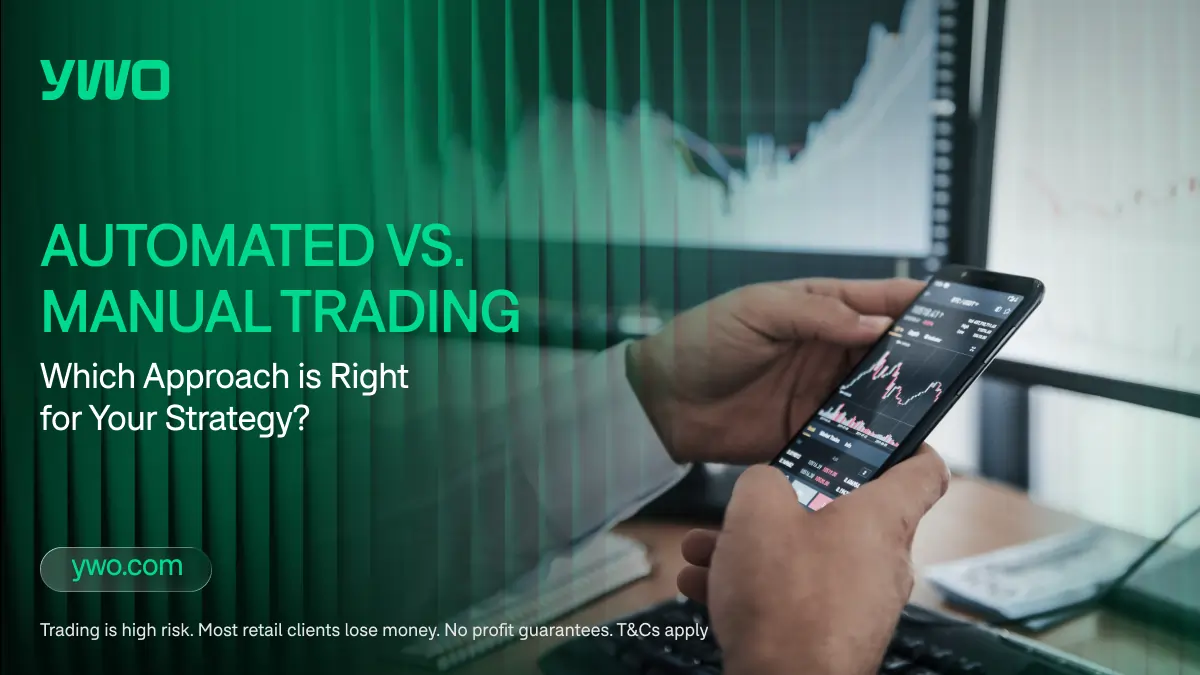
In one corner of the trading world sits the discretionary trader. This is the cowboy. They rely on intuition, experience, and the ability to “read the tape.” They believe the market is a “living, breathing beast” that can be tamed with enough screen time and caffeine.
In the other corner sits the algorithmic trader. This is the engineer. They believe the market is a “math problem” to be solved. They write code, backtest data, and let a server in a colocation facility handle execution according to predefined rules while they sleep.
The debate between the two is often framed as “Art vs. Science.” The manual trader claims a computer can never understand the nuance of a panic sell-off. The algo trader claims a human can never execute with the cold, hard discipline of a machine.
The truth, as usual, is somewhere in the middle. The market does not favor one approach over another.. The choice isn’t about which method is “better.” It is about which method best mitigates your specific weaknesses.
The Case for Manual Trading: The Human Touch
Manual trading is the oldest form of the game. It is you, the chart, and the buy button.
The primary advantage of the human operator is adaptability. A human can look at a chart and say, “Technically this is a buy signal, but the Federal Reserve Chairman just started speaking and he looks angry, so I’m going to sit this one out.”
An algorithm cannot assess tone, context, or non-quantifiable factors during an interview or conference call..It cannot read the room. A skilled manual trader can process qualitative information, news, sentiment, rumors, in a way that code simply cannot.
The human brain is also an incredibly sophisticated pattern recognition machine. It can spot messy, non-linear relationships that are difficult to program. A manual trader can navigate a choppy, unpredictable market by adjusting bias based on evolving conditions.
The downside, of course, is that the human brain is also highly emotional. Humans get tired. They get hungry. They become reactive. A manual trader who takes three losses in a row may be more prone to take a fourth, poorly timed trade just to get the dopamine hit of a possible win. The greatest asset of the manual trader, their brain, is also their greatest liability.
The Case for Automated Trading: The Cold Execution
Automated trading is the reduction of emotional discretion. It is the process of turning a strategy into a rigid set of rules that execute without hesitation.
The primary advantage of the machine is discipline. An algorithm does not second-guess itself. It does not “hope” a losing trade turns around. It does not move a stop-loss because it “feels” lucky. It executes the plan exactly as written, every single time.
This consistency allows for something manual traders struggle with: scalability. An algorithm can monitor fifty markets simultaneously. It can execute trades in milliseconds. It can trade 24 hours a day without needing a coffee break or a nap.
Furthermore, automated strategies can be backtested. You can run your rules against historical data to evaluate whether an idea would have performed under past conditions.. A manual trader rarely has this level of objective verification; they rely on selective memory and confidence.
The downside is rigidity. An algorithm is only as smart as its code. If market conditions change, if volatility spikes or liquidity dries up, the algorithm may continue executing the old rules unless it is adjusted or stopped.. It is a “garbage in, garbage out” system. If the logic is flawed, the computer will execute that flaw with terrifying efficiency.
The “Centaur” Approach: The Best of Both Worlds
Smart traders often stop fighting this war and choose a third path. The “Centaur” model combines human intuition with machine precision.
In this model, the computer does the grunt work. It scans thousands of stocks for setups. It alerts the trader when specific criteria are met. It calculates position size and risk parameters instantly.
But the human makes the final decision
The human provides the “sanity check.” They look at the setup the computer found and ask, “Does this make sense in the context of the wider market?” The human manages the macro risk, while the computer manages the micro execution.
This approach uses technology to leverage human skill, rather than replace it. It allows the trader to focus on high-level strategy while outsourcing the boring, repetitive tasks to the machine.
Which One Fits You?
Choosing between manual and automated trading is a personality test.
If you are a control freak who needs to feel the pulse of the market, manual trading is your lane. You need the autonomy to change your mind. You accept that your emotions are a risk factor, and you build systems to manage them.
If you are an analytical thinker who prefers logic to adrenaline, automated trading is the answer. You enjoy the process of building and testing systems more than the act of trading itself. You accept that you need to be a programmer and a data scientist as much as a trader.
Many people struggle with automation because they assume it as “passive income.” They expect to deploy a system and walk away. In reality, automation requires continuous supervision.. . Manual trading is a performance sport. Both require work. Both require respect for risk. The only wrong choice is pretending you are a robot when you are human, or pretending you are a genius when you are just guessing.
Final Reminder: Risk Never Sleeps
Heads up: Trading is risky. This is only educational information, not investment advice.