



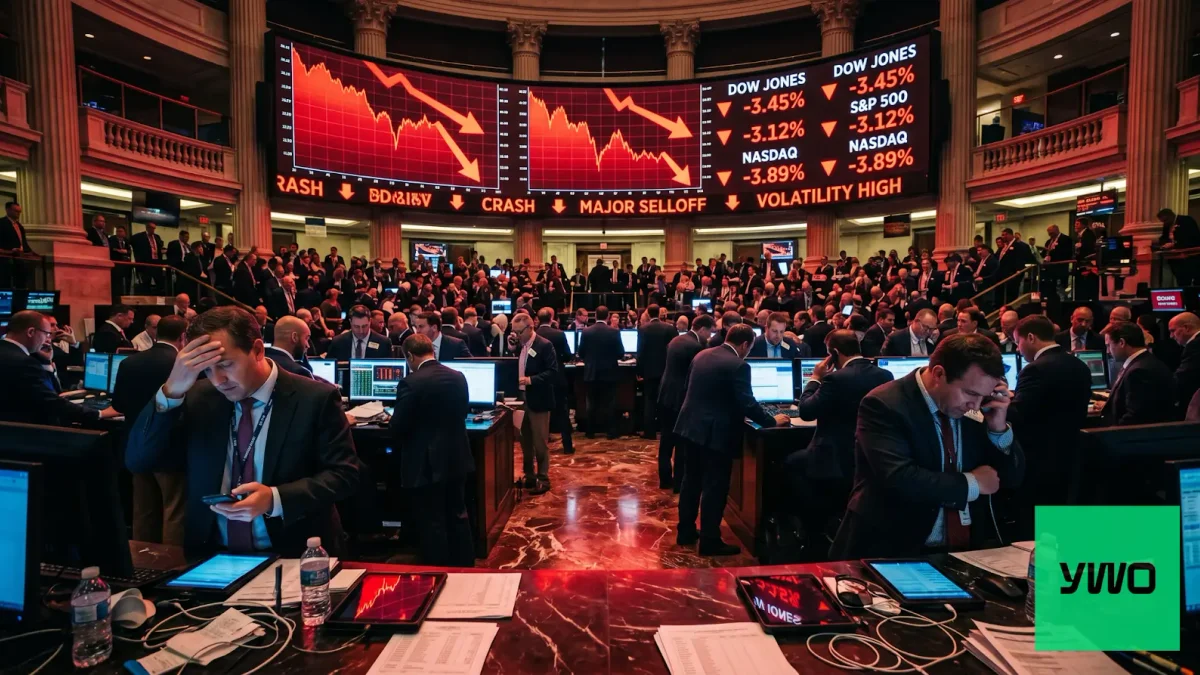
US equity index futures declined sharply in early Monday trading after President Donald Trump announced that the United States had fired upon and seized an Iranian-flagged cargo vessel in the Gulf of Oman.
Dow Jones Industrial Average futures (YM) fell more than 350 points, or approximately 0.9%, while S&P 500 futures (ES) also moved lower, according to live market data tracked by CNBC. The announcement, made over the weekend, significantly raised investor concern about the potential for a broader military confrontation between the United States and Iran.
Context
The seizure of an Iranian-flagged cargo ship in the Gulf of Oman marks a significant escalation in US-Iran tensions, a geopolitical fault line that has periodically disrupted global financial markets over the past several years.
According to CNBC, equity markets opened Monday under meaningful pressure as investors assessed the scope and potential consequences of the military action.
The Gulf of Oman and the adjacent Strait of Hormuz are among the world’s most strategically significant maritime corridors. Analysts note that roughly 20% of global oil supply has historically transited the Strait of Hormuz, meaning any disruption to freedom of navigation in the region tends to attract attention from energy and equity markets alike, according to Reuters.
Market participants are also weighing this development against an already-fragile backdrop. Equities had been navigating ongoing uncertainty around US trade policy, Federal Reserve rate expectations, and mixed corporate earnings signals heading into the week. The addition of a geopolitical risk premium has compounded existing headwinds for risk assets, according to Bloomberg.
Bulls may argue that geopolitical flare-ups have in some cases proven temporary in their market impact, with indices often recovering within weeks once the immediate uncertainty subsides. Bears, however, point to the risk that prolonged US-Iran confrontation could disrupt energy supply chains, weigh on corporate confidence, and introduce sustained volatility that delays capital deployment. Market relationships are dynamic and may change over time, and past correlations between geopolitical events and market outcomes do not guarantee future performance.
Key Data
According to live updates from CNBC, the key index futures readings in early Monday trade were as follows:
- Dow Jones futures (YM) fell more than 350 points, approximately -0.9%
- S&P 500 futures (ES) also declined, reflecting broad risk-off repositioning
- Nasdaq futures tracked losses in the broader complex, consistent with a risk-averse session opening
From a technical standpoint, the DJIA had been consolidating in recent sessions near levels that have historically attracted both buying and selling interest. Traders and analysts may observe whether current futures levels hold into the cash open or whether additional selling pressure may emerge, though technical observations are not predictive of future price action.
Market Snapshot
The following table reflects indicative market levels as of early Monday trading. All figures are subject to change. Market relationships are dynamic and may change over time.
| Asset | Direction | Change | Source |
|---|---|---|---|
| Dow Futures (YM) | Lower | ~-350 pts / -0.9% | CNBC |
| S&P 500 Futures (ES) | Lower | Negative | CNBC |
| Nasdaq Futures | Lower | Negative | CNBC |
| Crude Oil (WTI) | Higher | Elevated on supply risk | Reuters |
| Gold (XAU/USD) | Higher | Safe-haven demand | Reuters |
| US 10-Yr Treasury Yield | Lower | Flight-to-quality bid | Bloomberg |
| USD Index (DXY) | Mixed | Monitoring | MarketWatch |
Note: Levels are indicative and based on early session data. Figures may not reflect the most current pricing. Refer to live data sources for current prices
Events Ahead
Investors and analysts will be monitoring several upcoming catalysts that may influence index and risk-asset direction in the sessions ahead. All items should be treated as events to watch, not as guaranteed market movers:
- US-Iran diplomatic developments — Any escalation or de-escalation in official statements may continue to drive short-term sentiment in equity, energy, and safe-haven markets. Monitor Reuters for breaking developments.
- US Corporate Earnings Season — Key S&P 500 companies are scheduled to report this week. Results and forward guidance could interact with geopolitical sentiment to amplify or dampen index moves. See CNBC for the earnings calendar.
- Federal Reserve Communications — Several Fed officials are expected to speak publicly this week. Any commentary on the inflation or growth outlook could influence rate expectations. Monitor the Federal Reserve Events Calendar.
- Economic Data Releases — Watch for US housing data, manufacturing surveys, and other releases that may affect equity valuations. Track the full schedule at Investing.com Economic Calendar.
- Energy Market Updates — Given the Gulf of Oman incident, EIA inventory data and any OPEC+ commentary may take on added significance. See EIA for supply data updates.
Risk Disclaimer: Trading CFDs involves substantial risk and may result in the loss of your invested capital. CFDs are complex instruments and come with a high risk of losing money rapidly due to leverage. You should consider whether you understand how CFDs work and whether you can afford to take the high risk of losing your money. Past performance is not indicative of future results. This content is for informational and educational purposes only and does not constitute investment advice.