



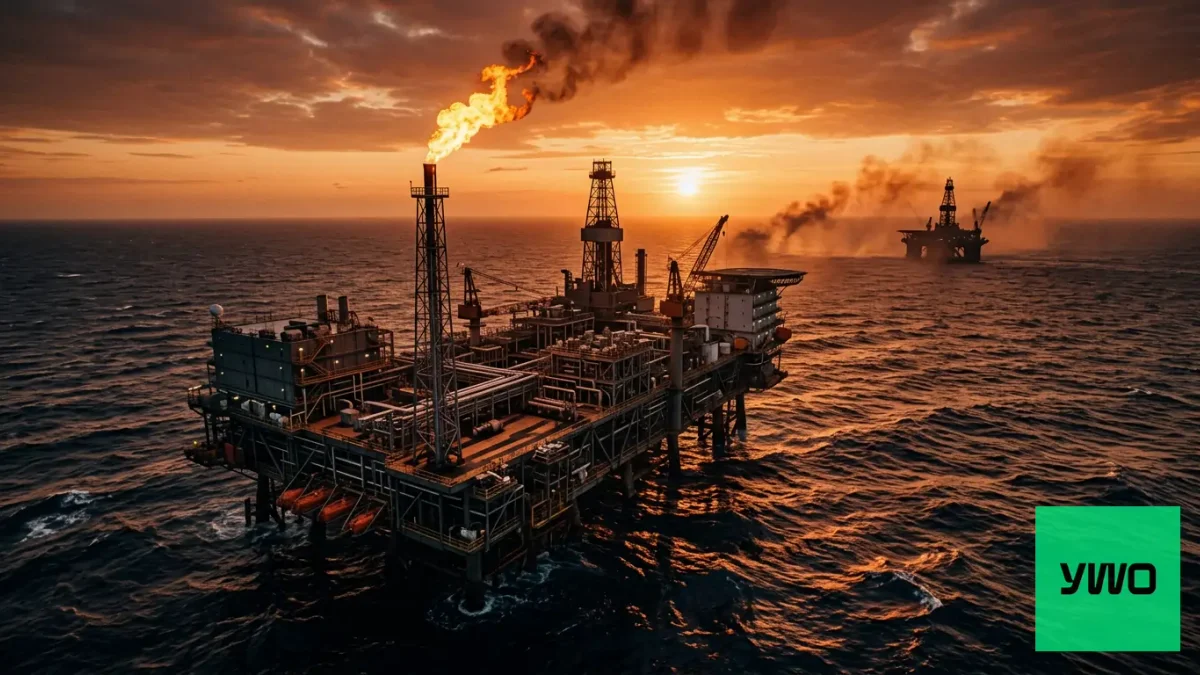
The $100 handle on WTI is back, and this time it’s not about supply cycles or OPEC quotas — it’s about a ceasefire that Trump himself described as having “approximately a 1% chance of living.” That’s not a diplomatic euphemism. It is really reducing the probability of a near-term diplomatic resolution
WTI futures for June rose 3.3% to $101.37 per barrel as of 07:57 ET on Tuesday. Brent crude for July gained 3.2% to $107.58 a barrel in the same window, according to CNBC’s Justina Lee. Both benchmarks are now up more than 40% since the US and Israeli-led war against Iran began on February 28.
Trump Rejects Iran Counterproposal as Oil Risk Premium Expands
The catalyst was blunt. Trump told reporters that Tehran’s counter proposal to end the conflict was “garbage,” and characterised the ceasefire’s condition in terms no diplomat would choose: “I would say the ceasefire is on massive life support, where the doctor walks in and says, ‘Sir, your loved one has approximately a 1% chance of living.'” That quote, reported by CNBC, stripped whatever peace premium remained in oil positioning. Markets had apparently been holding some probability of a deal. They’re not holding much now.
The Strait of Hormuz sits at the centre of this. A prolonged blockage could place upward pressure on spot prices and materially affect futures curve dynamics and supply-chain pricing . Saudi Aramco CEO Amin Nasser, speaking on the company’s Q1 earnings call Monday, put a hard timeline on the damage: “If the Strait of Hormuz opens today, it will still take months for the market to rebalance, and if its opening is delayed by a few more weeks, then normalization will last into 2027.” That framing from the head of the world’s largest oil company is not a hedge — it’s a warning about structural tightness.
The satellite image circulated alongside CNBC’s report showed the Salalah oil storage fire in Oman — ignited by an Iranian drone strike on March 11 — still visible as a plume over the Gulf of Oman’s strategic port as late as March 13. That fire, weeks after the strike, is the visual shorthand for how slowly infrastructure damage clears in this conflict.
The Sectors That Feel This First
At $100-plus WTI, the pressure on downstream names is immediate. Airline margins, already squeezed by the conflict’s knock-on effects on regional routes, face a fresh headwind from jet fuel costs closely correlated with Brent. Trucking and logistics names with unhedged fuel exposure are in the same position. Conversely, energy producers have historically attracted investor attention during periods of elevated crude pricing, though equity performance may vary depending on broader market conditions.
Citi flagged the directional risk plainly: “Oil prices have been volatile and can rise further if US-Iran dealmaking remains thorny,” the bank wrote in a note cited by CNBC.
The One Path That Could Change This
Henry Wilkinson, chief intelligence officer at geopolitical and security intelligence firm Dragonfly, told CNBC’s Squawk Box Asia on Tuesday that re-escalation remains possible but flagged one specific channel worth watching: Trump may ask Chinese President Xi Jinping to press Iran to accept US terms later this week during China-US talks. If Beijing applies that pressure and Tehran signals flexibility, a rapid reversal in oil pricing could follow — the same speed in reverse. A genuine ceasefire or Hormuz reopening announcement could prompt rapid repositioning in crude markets and increased short-term volatility . The 40%-plus rally since February means crowded longs, and crowded longs unwind quickly when the headline changes.
That’s the bear case on the trade: the geopolitical bid in oil is entirely binary. Either the war drags and Nasser’s 2027 normalisation call proves accurate, or a single diplomatic breakthrough may compress the risk premium within hours. There’s not much in between.
Risk Disclaimer: Trading CFDs involves substantial risk and may result in the loss of your invested capital. CFDs are complex instruments and come with a high risk of losing money rapidly due to leverage. You should consider whether you understand how CFDs work and whether you can afford to take the high risk of losing your money. Past performance is not indicative of future results. This content is for informational and educational purposes only and does not constitute investment advice.